Saturday, 3 October 2015

BLOGPOST 7 RESEARCH- WHAT CONCLUSION CAN YOU MAKE ABOUT THE TITLES USED IN THE TITLE SEQUENCES.

What conclusions can you make about the titles used in the title sequences?

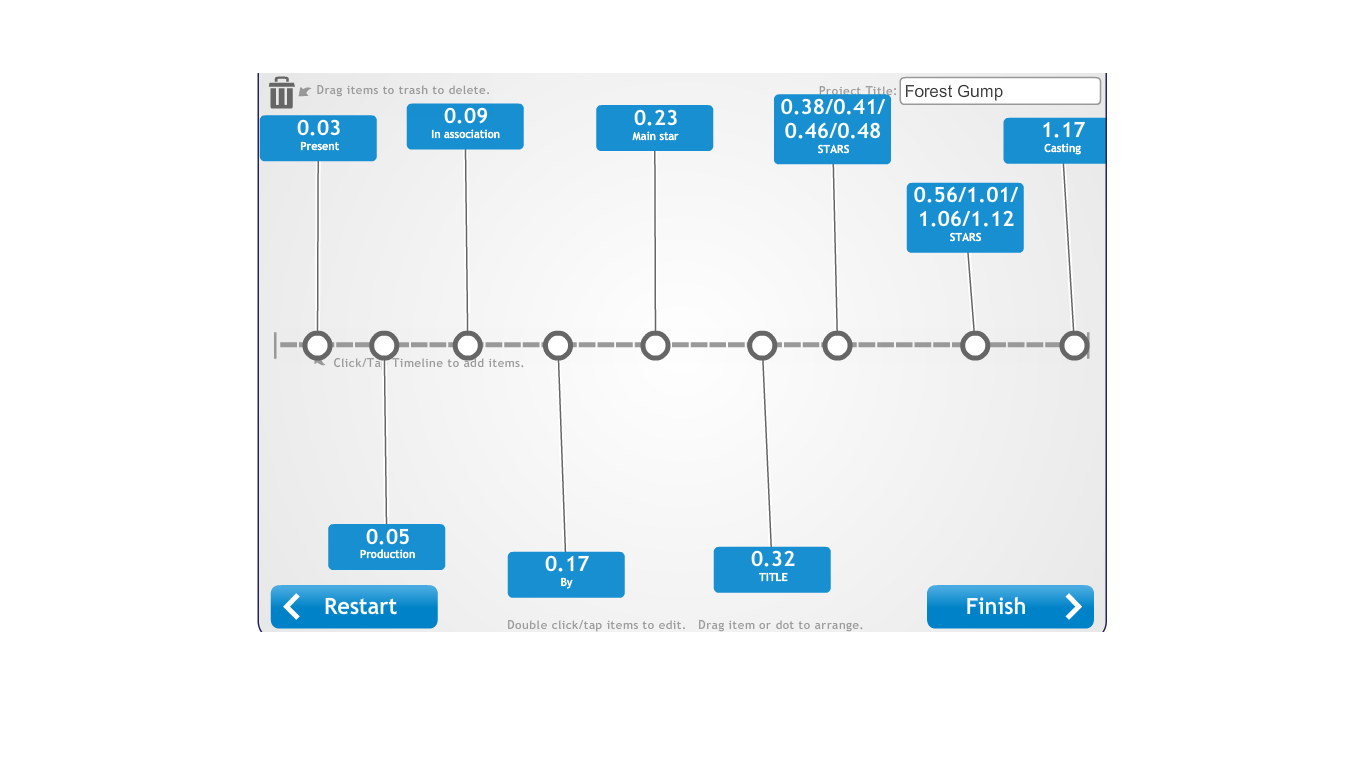
A film sequence is a sequence in which film makers present their titles. From the film openings I have seen various ways that film makers use titles in title sequences. the main reasons that film makers use titles In the opening is to:
  • Make sure that everybody involved In the film gets acknowledged for what they have done
  • It also attracts audience by having stars names In the film will make the audience want to watch on if they know and like the stars.
 HOSTAGE TIMELINE.
 

This is the timeline of title sequences for hostage. as you can see the titles are spread out over different intervals ( about 2-4 seconds) and the titles last for 2 seconds. The font of the opening is simple to read however it is stylized some other examples of stylized title sequences are: juno and casino royale. The font is also large which appeals to the audience as people can read it clearly, the colour palette for the font is red and black which also creates a statement. To conclude I feel that the font suits the genre as black and red connotes horror and thriller and could represent action and 'hostage' seems like it could be a hybrid film action/thriller.


Things that could be in title sequences are:

  • Idents (production company and distribution company)
  • The film title
  • The main star
  • The other stars
  • The casting company
  • The co-producer
  • The executive music producer
  • The visual effects supervisor
  • Who designed the costumes
  • The music editor
  • The editing
  • The production designer
  • The director
  • The producer
  • If it was based on a novel depending on the movie.


RESEARCH - Titles


‘SKYFALL’


The opening to film starts with lots of dark, gloomy graphics and action, it address emotion of the film and reflects its danger. A tense background sound, many close up shots, guns, people drowning and fast moving images create an impression that this is going to be an action movie. The main character is shown from the beginning scene; however, the setting stays in shadows of mystery as it shows many different places and the images keep switching between animation graphics and moving image titles which confuse the audience. The sequence used in ‘Sky Fall’ opening is stylized title sequence; this means that there are many special effects, filters and digital editing involved. It reveals events and images that appear later in the film. The credits themselves are very simple, white, and even kind of transparent.


'FLUBBER'


http://www.artofthetitle.com/title/flubber 
The opening starts with an orchestra playing in the background and scientific formulas, chemical bond chains, twisting helixes flying around in the air and then forming titles. Titles itself are quite simple; white, transparent, but have some use of mathematical and chemical equations in them, this is a really good way to merge them with the story. The movie title is much bolder and bigger than the credit titles. It is a narrative title sequence as it leads straight into the movie. We are introduced to the main character and the plot set up at the beginning as well. It’s easy to guess the genre of this movie from ‘Walt Disney’ indent, main actor and the joyful soundtrack. 


RESEARCH - Titles (Kyle Cooper interview)


What makes a good title sequence according to Kyle Cooper?


Kyle Cooper is an American designer of motion picture title sequences. He was accredited with an idea of handwritten title sequences as an art form. Cooper He has made over 100 film title sequence including his title sequence for ‘seven’, which was nominated by New York Times magazine as one of the most important title sequences in 1990’s. 


K.C. thinks that titles/credits that sets an expectation, gets people excited and seamlessly merge into the film make a good title sequence.


The front that K.Cooper used in ‘SEVEN’ was all handwritten. Typography was linked to the serial killer’s handwriting, and this way it perfectly integrated in the storyline. His others movies: ‘DEADZONE’ and ‘TO KILL A MOCKING BIRD’ are also very original an interesting. The typography that he uses encapsulates characters obsession and makes contrast with the moving motion background.


When he mentions ‘story based’ main title sequence, he means either opening with metaphor or directly, specifically showing what movie is about. After an audience test screening, studio might face problems such as; people not understanding the movie, or low budged to make and add another scene. This is why two and a half minutes of the title sequence become very important to the studio. It helps people to understand what movie is about, it can also be used as prologue, or can even be ahead of the film using another scene that is not in the actual movie.


According to Kyle Cooper, title design can improve the whole story and make the content more understandable.

Thursday, 1 October 2015

BLOGPOST 6 RESEARCH - ANALYSING 2 FILM TITLE SEQUENCES.

Analyze 2 Film Title Sequences.

American Horror Story:
This opening has a very disturbing opening sequence we can understand the genre of the film though a various amount of things. Firstly the soundtrack was one of the main things that the audience would notice and interpret as the music was really eerie and creepy. The next thing was the visual images, the visual images creates questions that the film is meant to answer ( for example they had body organs in bottles, which creates the question of why they are there and who do they belong to). We can also see lots of added effect onto the actual film opening and it adds even more of an effect on the audience lastly the film opening itself makes you feel apprehensive and on edge which will probably be the feeling you feel throughout the film.


Unbreakable Kimmy Schmidt:
In this particular film opening you can get a feel of the mood which is a very happy/vibrant mood and genre which is comedy from a number things. Firstly in the beginning of the sequence the camera is outside looking in and gets extremely bright as a woman is helped outside what looks like a dark cave already giving the audience some clue into the film. The audience can also hear an inspiration soundtrack in the background giving an impression that the woman has been rescued. further into the title sequence we hear a line of dialogue ( " its a miracle") which is humorous as he looks funny. The rest of the opening shows titles on still images which is clever as it looks like past family photos which is (titles moving on a still image) and videos which adds to the authenticity. The film opening also includes title credits of some of the stars, producer, directors and so fourth which seems to be integrated into the film as the font matches what's being shown. Lastly the title of the film appears at the end of the film opening, it creates an effect because that's the last thing the audience will see before watching the actual film which makes the film title more memorable.

BLOGPOST 5 RESEARCH - WHAT MAKES A GOOD TITLE SEQUENCE.

what makes a good title sequence according to Kyle cooper 


There are many things that make a good opening but according to Kyle cooper the main three main factors:


Set an expectation: 
The opening film is meant to set an expectations of the film and give out subtle clues. For example the film "seven" involves someone cutting their fingers with a razor blade so already the audience has their expectations set ( a dark and sinister movie). 

Getting you excited:
The opening of the film is meant to look exciting so that your audience show interest though the whole film. As if your movie opening is boring it sets a mood for the whole film and the audience may become disinterested. 

Seamlessly dub tails into the film:
The last thing that makes a good film opening is blending the movie opening with the whole film as the film opening can set a backstory for the whole film. It can also be used for another scene for the movie or something that the audience may have not understood if the film has run out of budget.


RESERACH - The purpose of title sequences and film openings

Title sequences and film openings are important features of the film. They can be presented in different ways.

Firstly, they can be ways of introducing the story plot. This can be helpful with determining the genre of the film, as well as giving the audience a taste of what the film is about; whether clips from the movie are being shown, or just graphics and convention of the particular genre. Soundtracks used in the opening are also used to help determine the genre and set the mood.

This is also a chance for the production teams to get credit as idents are shown during the opening of films. These are usually really familiar to the audience and they will normally recognise them. The openings of film are also a chance for the main characters to be introduced, as well as the settings. This can be done by using the title sequence as an opening scene, or by using clips from the movie.

Prelim Evaluation

I feel as if by completing this task, it has helped me to understand more about the camera and a bit more about how filmed productions are put together. I believe that planning was one of the strongest steps that we achieved in the process of the production as everyone in the group knew what they were doing and knew what we had to accomplish. Filming was also a strong point as I think that we got really good shots, however we needed to handle our time better as we didn't get everything done in time. Additionally, I feel as if editing could've been done better to show more of the shot reverse shots we had produced. On the other hand, we managed to successfully show someone walking through the door, sitting down and having a conversation with someone, using match cuts and also showed our understanding of the 180 degree rule as we didn't break it.

If we were to complete the project again, I would ensure that we have enough time to get all of the shots that we needed, and to edit the footage better to show the shot reverse shot more. Moreover, we have learnt that storyboarding and shot lists are vital when filming a project as it really helps you get more of an idea of how your finished product will look like, and would give us a head start in filming as we already have everything planned, meaning we wouldn't waste time.